Field Notes — Alberta
The Giant Perogy of Glendon
In Glendon, Alberta, dinner is served twenty-seven feet in the air: the world's largest perogy, speared on a fork, in the heart of Ukrainian-Canadian country.
The Short Answer
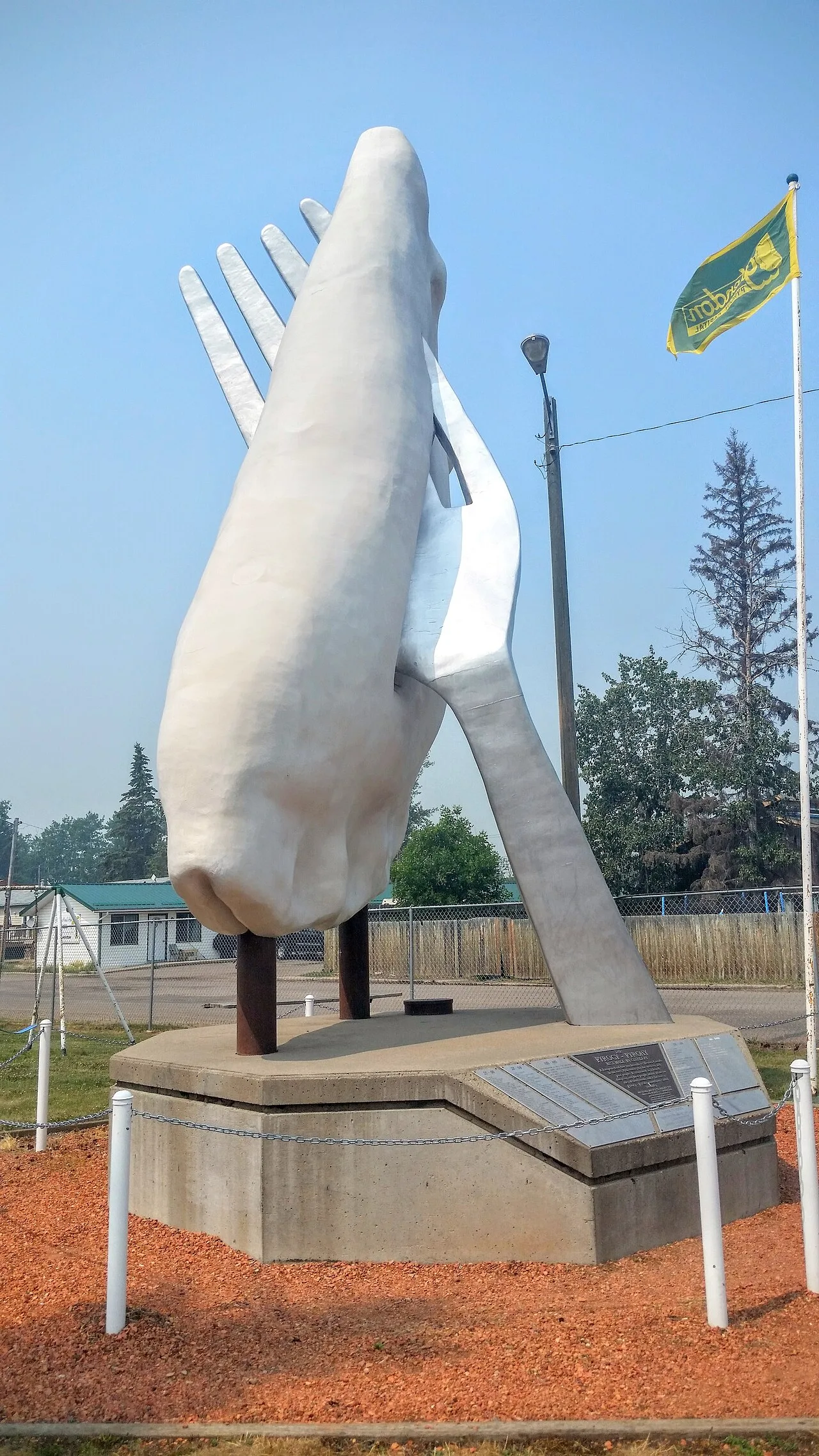
The Giant Perogy is a golden, crimped-edge perogy speared on a fork, standing about 27 feet tall in a small park in Glendon, Alberta. It went up in 1991 as a monument to the area's Ukrainian-Canadian food heritage. The outdoor stop is free and viewable year-round, and travellers stop for the photo before looping to other prairie food giants nearby.
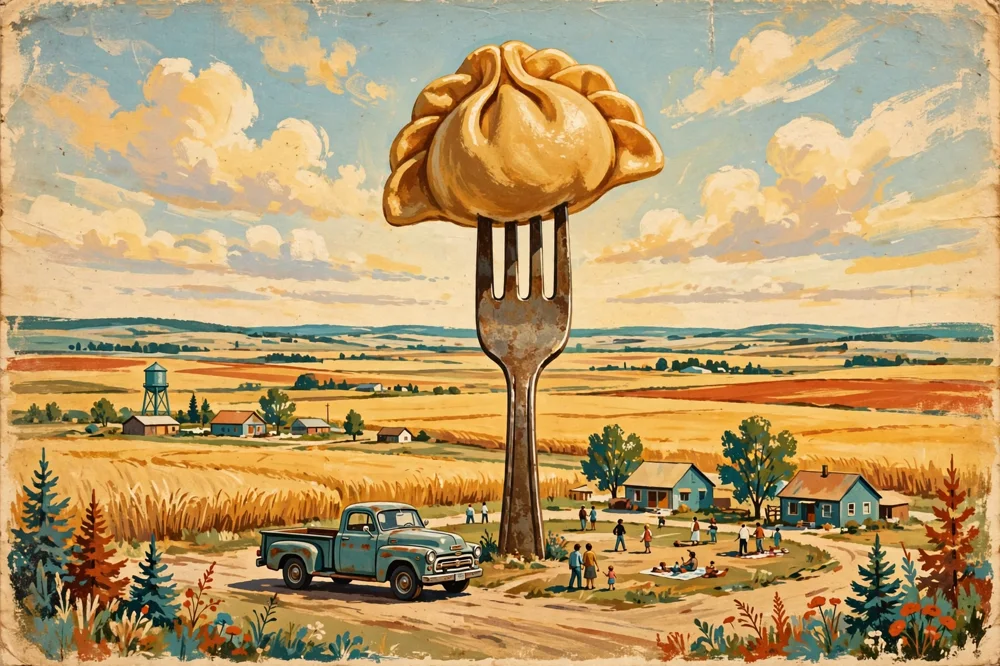
There are two ways to tell the world who you are. You can put it on the welcome sign — or you can build a perogy roughly the size of a school bus, spear it on a fork, and raise the whole thing over your town park.
Glendon, Alberta chose the fork.
Dinner, Twenty-Seven Feet Up
The Giant Perogy went up in 1991, and it has been Glendon’s unmistakable landmark ever since: a golden, crimped-edge perogy — a pyrogy, in the local spelling — speared on an enormous fork, standing about 27 feet tall over a village of a few hundred people in east-central Alberta.
It belongs to a proud prairie family of giants. Not far away, Vegreville guards the world’s largest pysanka, a towering Ukrainian Easter egg, and Mundare answers with a giant sausage. Drive this corner of Alberta with an appetite and the horizon keeps serving courses.
Why a Perogy?
Because around here, the perogy isn’t a side dish. It’s the headline.
This is Ukrainian-Canadian country, settled by families who brought their recipes across an ocean and then fed generations of farm kids, church suppers, and wedding dances with them. A perogy is dough, potatoes, cheese, work, and love — pinched shut by hand, one at a time, usually by somebody’s baba, usually faster than you can count.
Glendon didn’t build a statue to a food. It built a statue to its grandmothers.
The Festival Rule
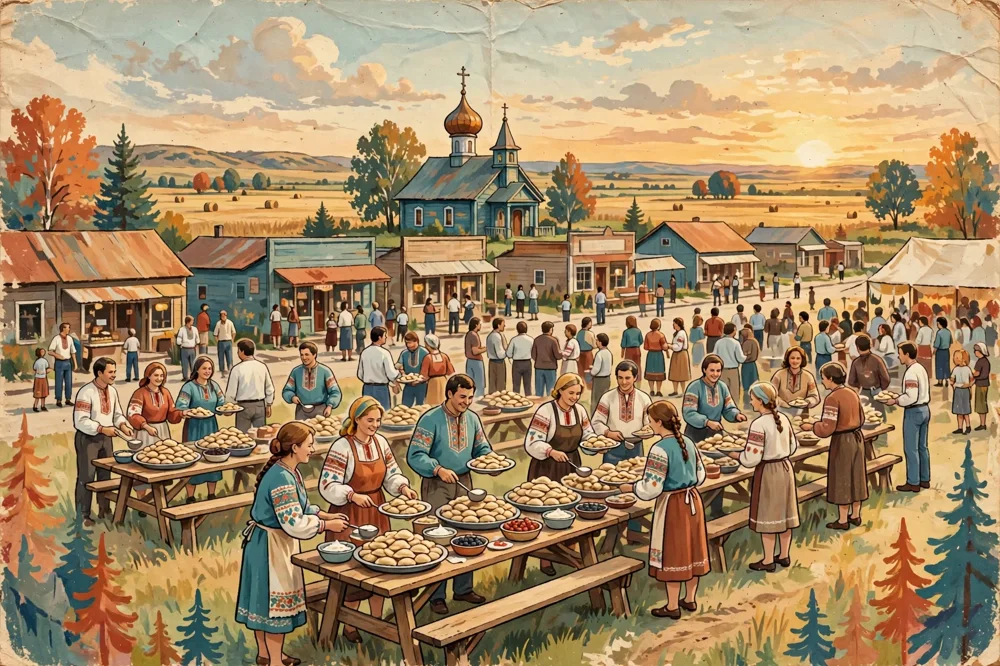
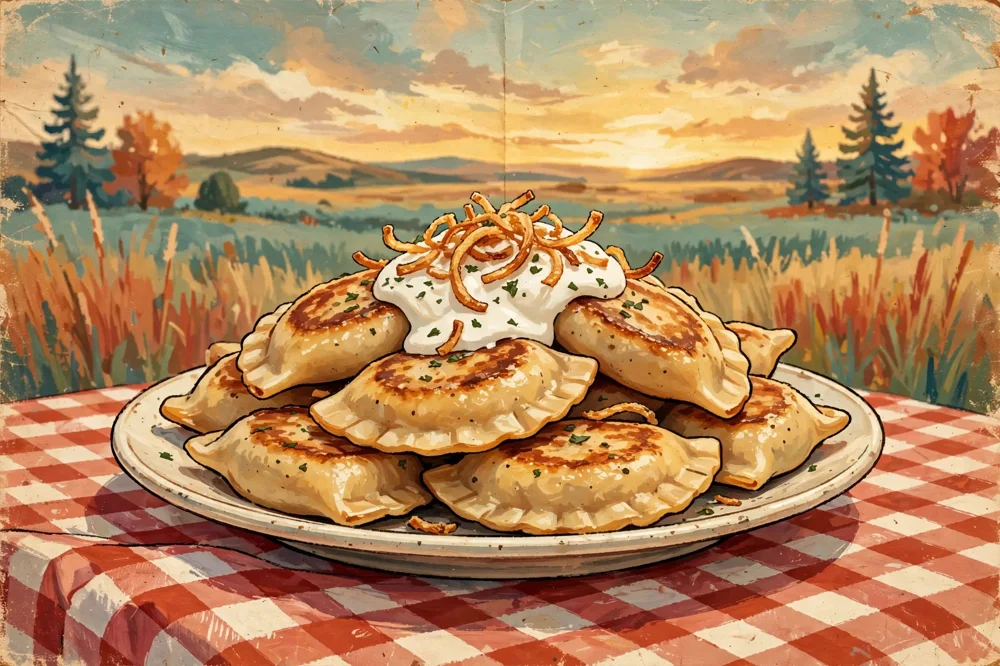
When Glendon celebrates its pyrogy festival each summer, the statue stops being the biggest perogy story in town. Long tables come out, the volunteers fire up the fry pans, and the same dish that towers over the park gets served the proper way: boiled, pan-fried in butter and onions, buried under sour cream.
This is the secret of every great roadside giant in Canada. The statue gets you off the highway. The supper makes you stay.
First we built the perogy. Then we ate our way to the statue’s standard.
Worth the Drive
Stand under the fork at golden hour, when the whole statue glows the colour of a properly fried perogy, and you’ll understand: the giants of the prairies aren’t jokes. They’re declarations. Glendon looked at its history — the farms, the churches, the supper tables — and said, that, but taller.
Then it fed everybody. That’s the most Albertan sentence there is.
Common Questions
Where is the Giant Perogy?
It stands in a small park in Glendon, in east-central Alberta. The article describes it as an outdoor roadside stop that is free and viewable year-round.
How tall is the Giant Perogy, and when did it go up?
The statue stands about 27 feet tall and went up in 1991. It shows a golden, crimped-edge perogy speared on an enormous fork.
Why did Glendon choose a perogy?
Glendon is in Ukrainian-Canadian country, where perogies are tied to family recipes, church suppers, wedding dances, and generations of grandmothers' work. The statue honours that food heritage rather than just the dish.
What other stops pair well with Glendon?
The article points to Mundare's giant sausage and Vegreville's giant pysanka as an easy loop in the same corner of Alberta. Glendon also celebrates with a pyrogy festival in the summer.
The Real Thing
More Strange Stops
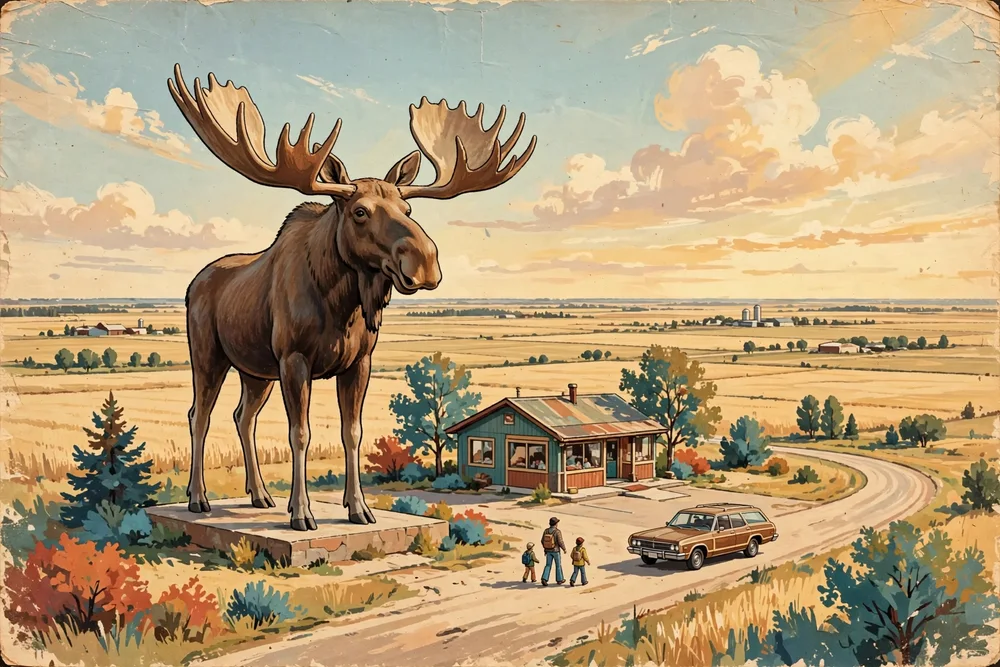
Mac the Moose
Moose Jaw's Mac the Moose has watched the Trans-Canada Highway since 1984 — and when Norway built a taller moose, Saskatchewan answered with bigger antlers.
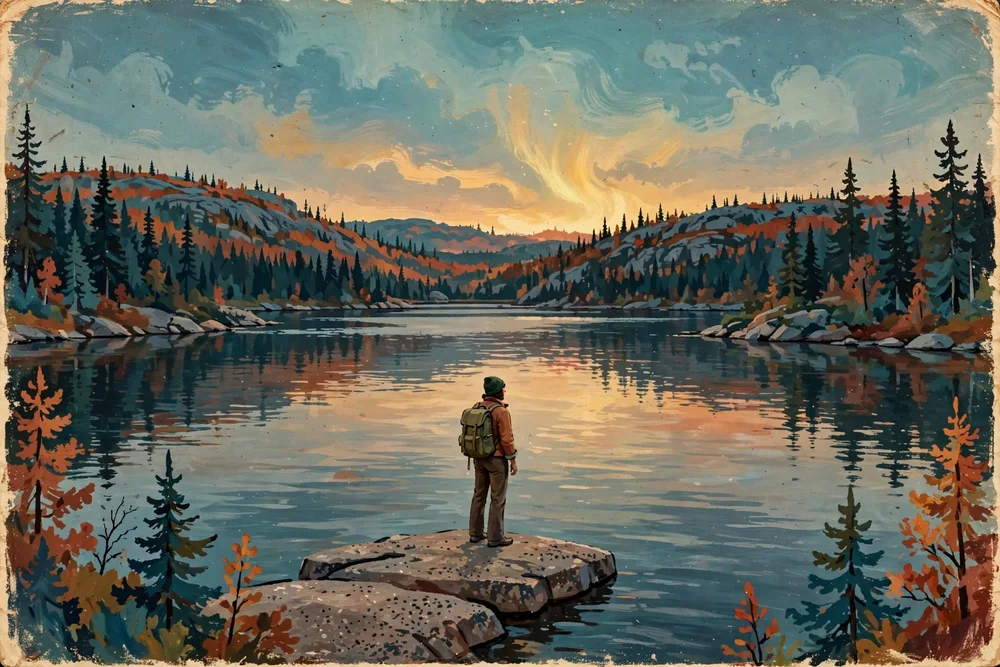
Falcon Lake: Canada's Strangest UFO Story
In 1967, a Winnipeg prospector walked out of the Whiteshell woods with grid-pattern burns and a story he never changed. You can still hike to the rock.