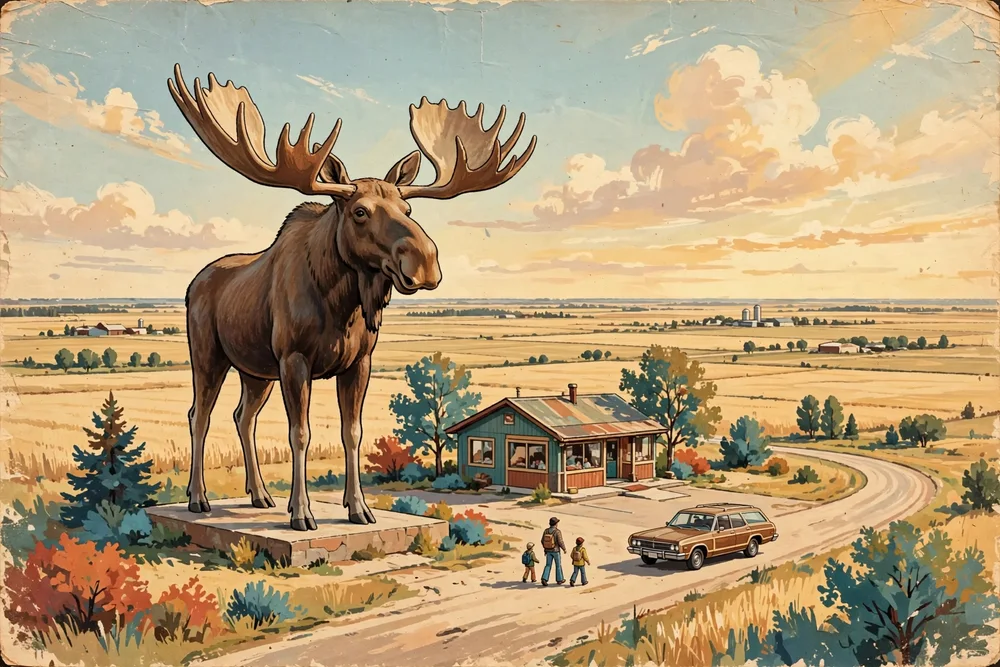
Mac the Moose
Moose Jaw's Mac the Moose has watched the Trans-Canada Highway since 1984 — and when Norway built a taller moose, Saskatchewan answered with bigger antlers.
Chasing Roadside Giants & Hidden Wonders
The Atlas Files
Moose Jaw's Mac the Moose has watched the Trans-Canada Highway since 1984 — and when Norway built a taller moose, Saskatchewan answered with bigger antlers.
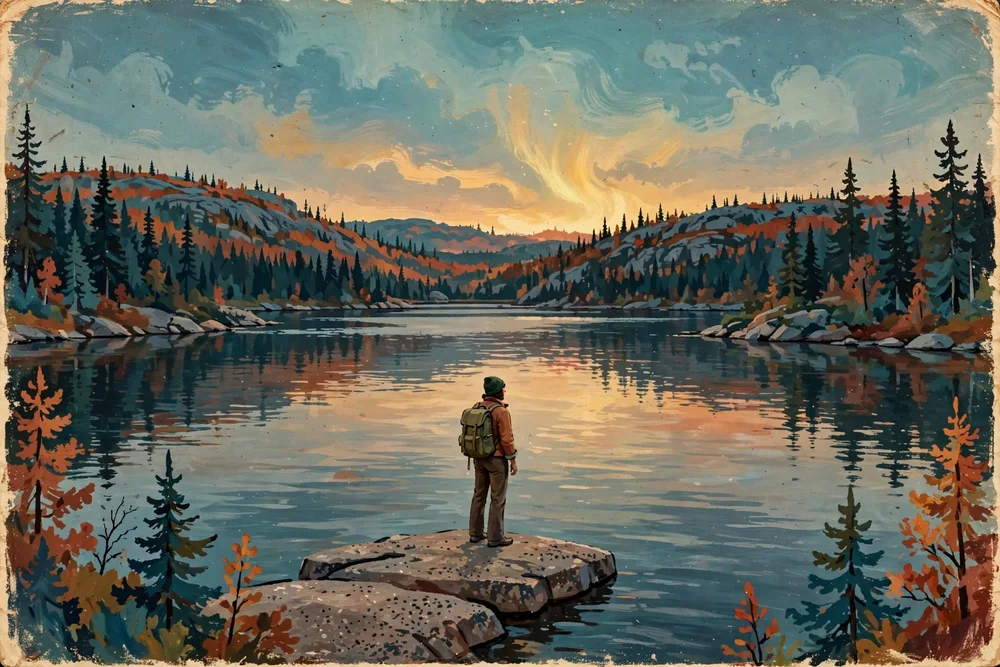
In 1967, a Winnipeg prospector walked out of the Whiteshell woods with grid-pattern burns and a story he never changed. You can still hike to the rock.
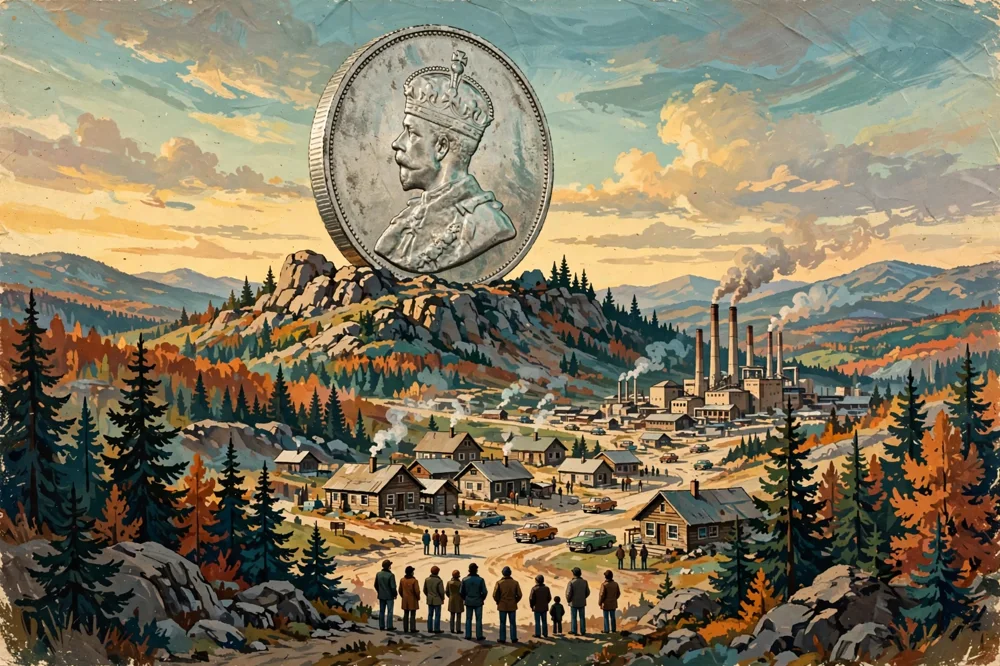
Sudbury, Ontario keeps its spare change on a hill: a nine-metre stainless-steel nickel built by one stubborn firefighter above a city mined from rock.
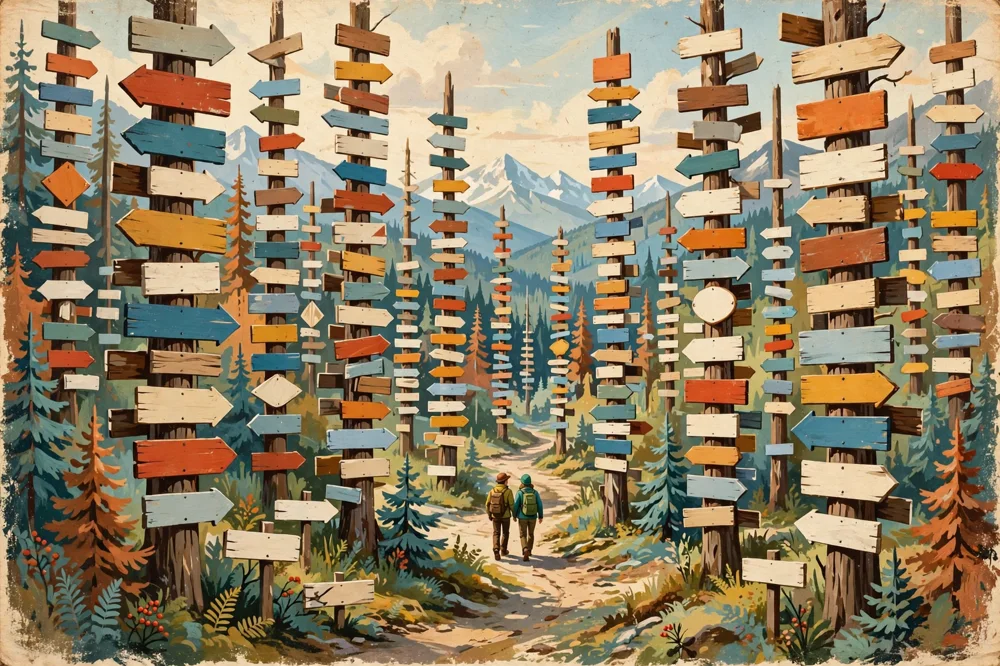
In Watson Lake, Yukon, a homesick soldier's single sign in 1942 grew into a forest of an estimated 100,000 signs from everywhere on Earth.
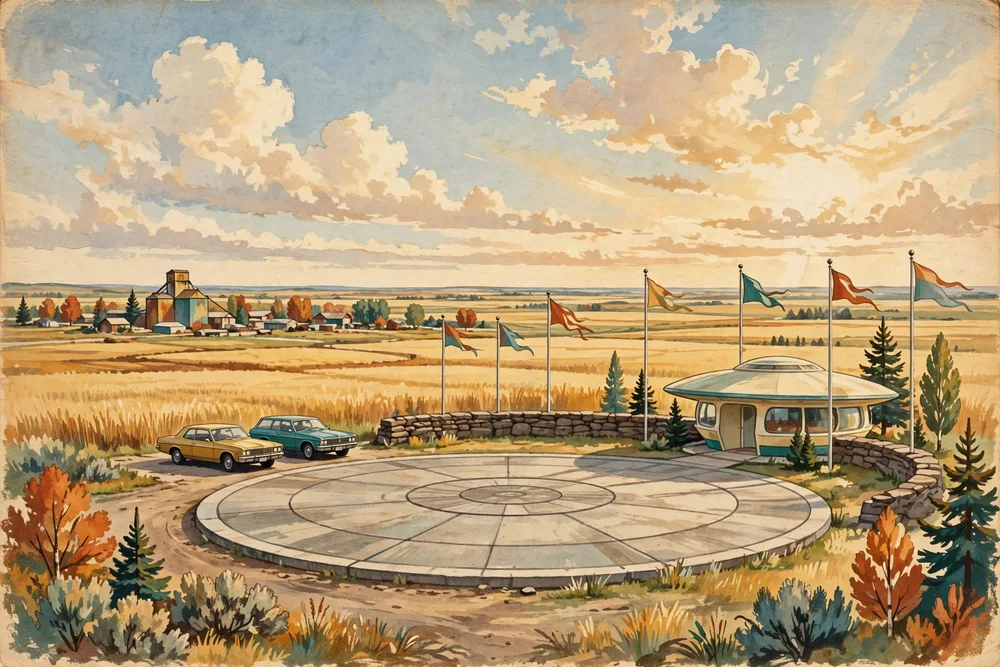
In 1967, while other towns built arenas for Canada's Centennial, St. Paul, Alberta built a landing pad for flying saucers — and welcomed every visitor.
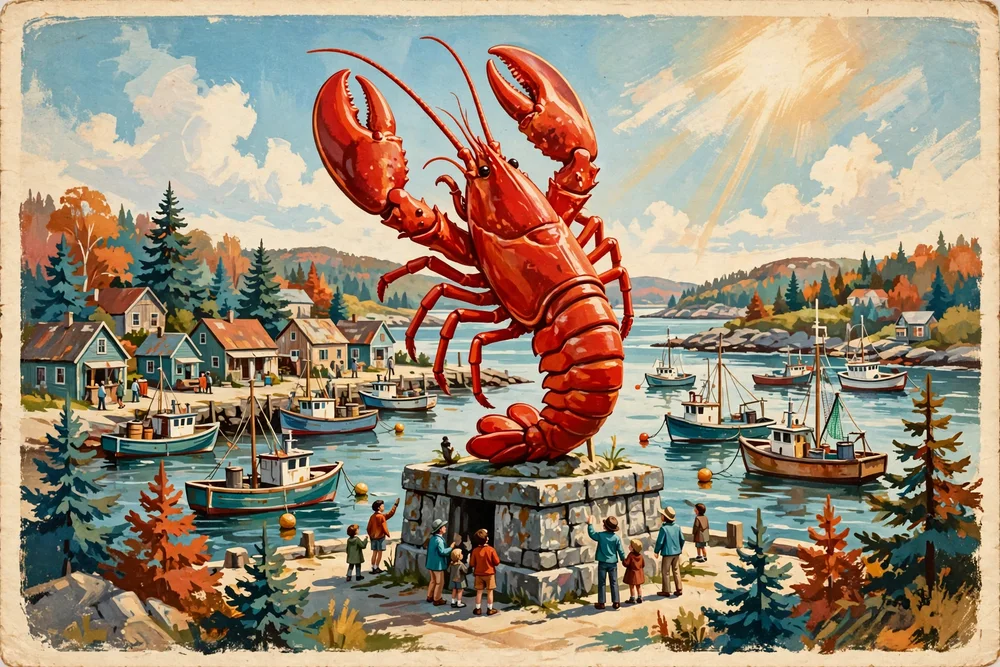
Shediac, New Brunswick calls itself the Lobster Capital of the World and guards the claim with a giant red lobster, some 11 metres long, that you can climb.
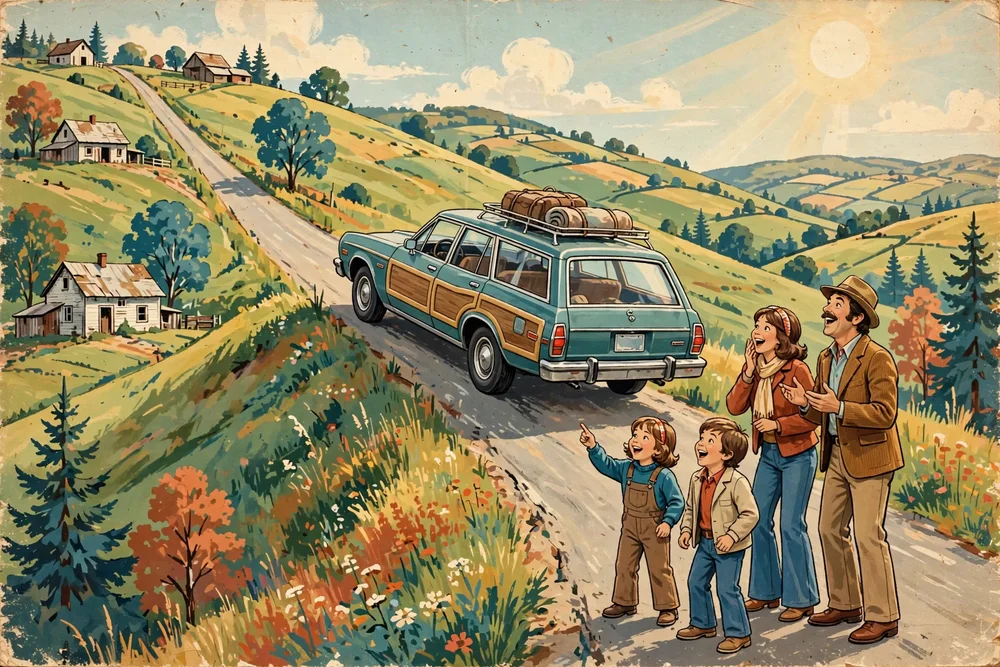
In Moncton, New Brunswick, you stop the car, shift into neutral — and roll uphill. Magnetic Hill has been happily fooling drivers since the 1930s.
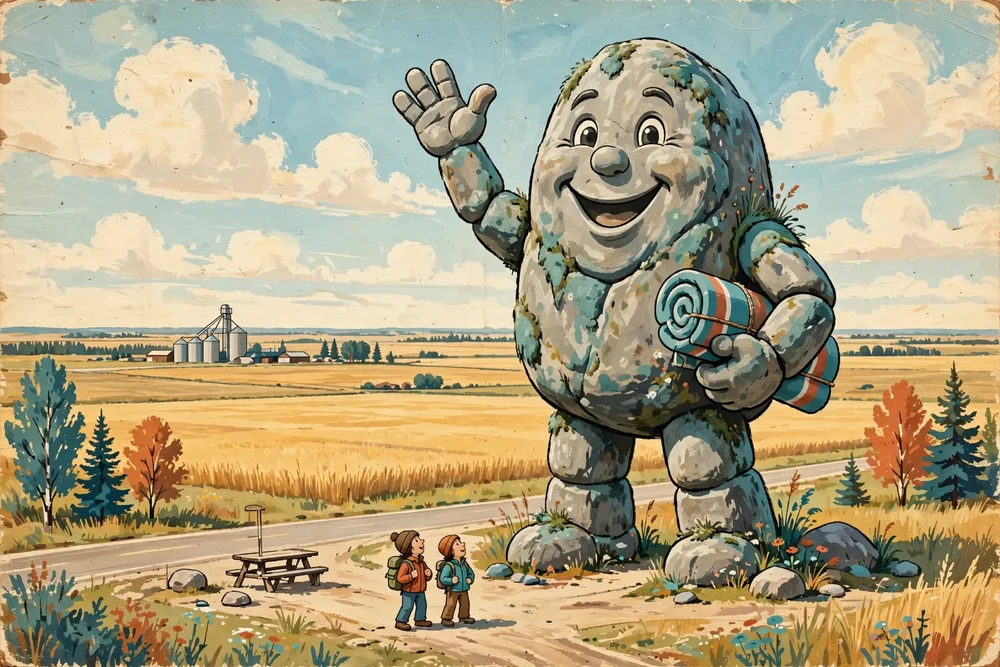
Gladstone, Manitoba took its own name as a dare — glad means happy, a stone is a rock — and built the grinning 36-foot proof beside the Yellowhead Highway.
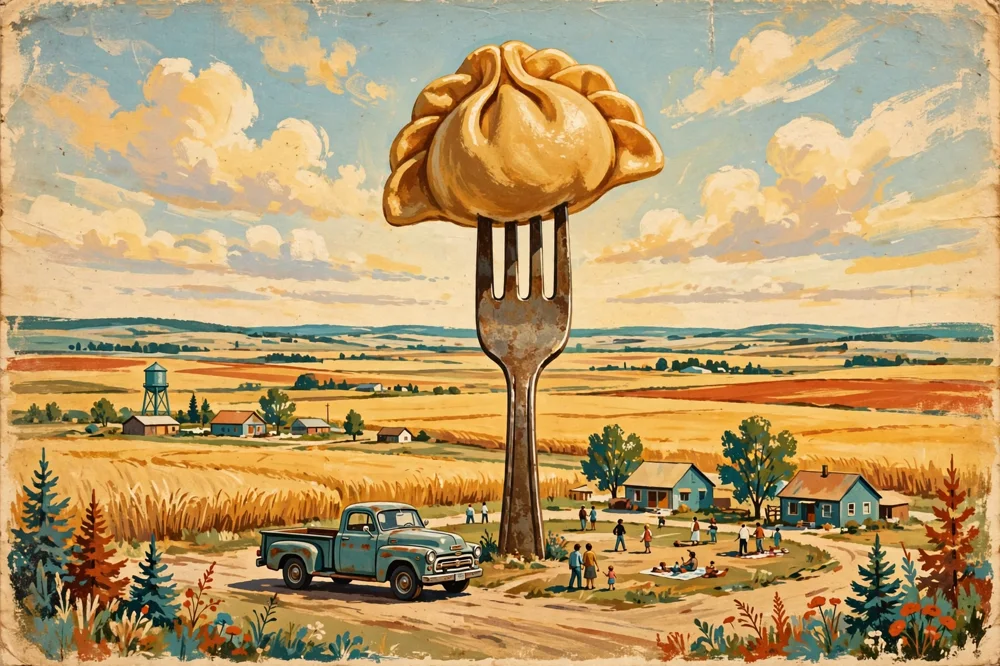
In Glendon, Alberta, dinner is served twenty-seven feet in the air: the world's largest perogy, speared on a fork, in the heart of Ukrainian-Canadian country.
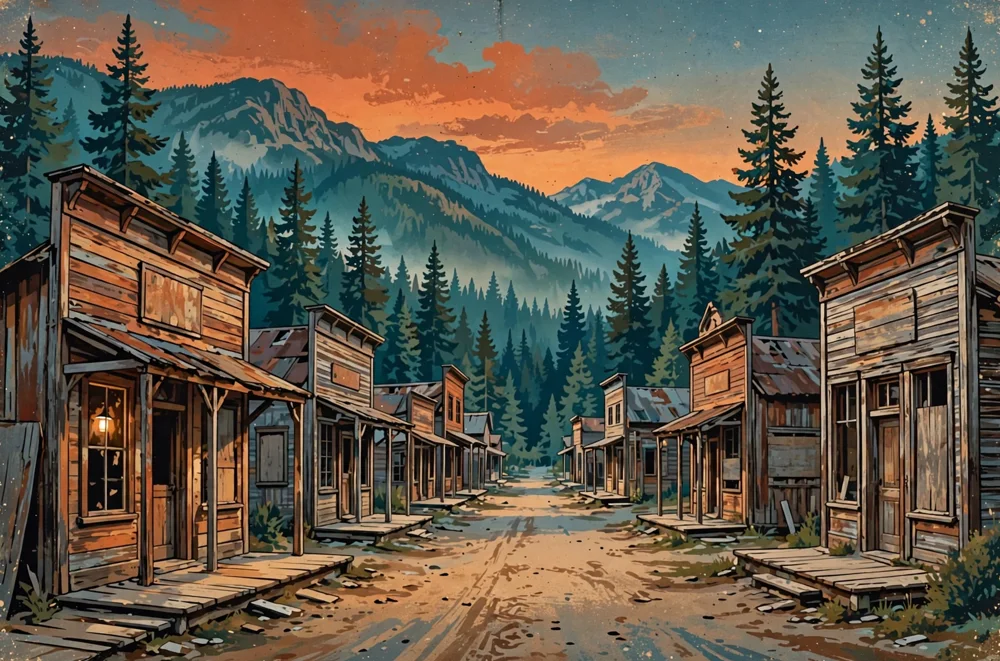
Silver rushes, gold fevers, and the towns they left behind — a road trip through the beautiful, stubborn ghost towns of British Columbia's interior.