Field Notes — British Columbia
Chasing Ghosts in BC's Interior
Silver rushes, gold fevers, and the towns they left behind — a road trip through the beautiful, stubborn ghost towns of British Columbia's interior.
The Short Answer
British Columbia's interior is scattered with mining towns left behind when silver, gold, and copper booms faded. This road trip links Sandon in the Slocan Valley, preserved Barkerville, and Phoenix above Grand Forks, where foundations and a cenotaph remain in the forest. Travellers stop to walk old main streets, read the plaques, and see the heritage still standing.
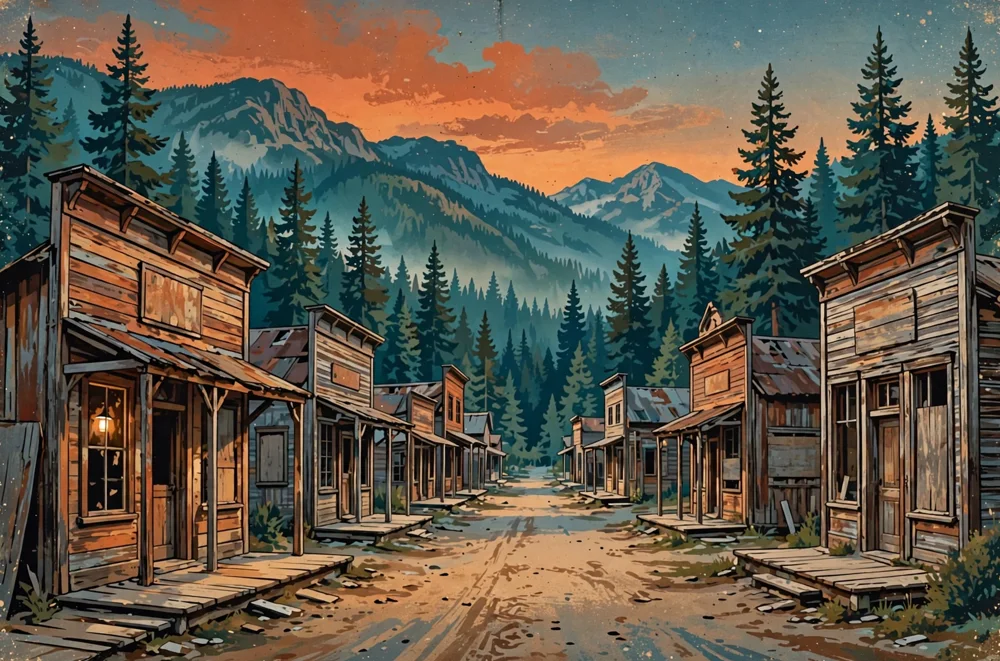
Drive the back roads of British Columbia’s interior and you’ll notice something: the map is full of towns that were supposed to be cities. A century and a bit ago, silver and gold pulled thousands of people into these valleys. Hotels went up in a season. Newspapers launched, opera houses opened, and every creek with a glint in it got a name and a post office.
Then the ore ran thin, the prices fell, or the railway chose the other valley — and most everybody left. What they left behind is the best roadside museum in Canada: whole main streets standing in the trees, waiting for somebody to come read them.
Sandon: The Town That Refused
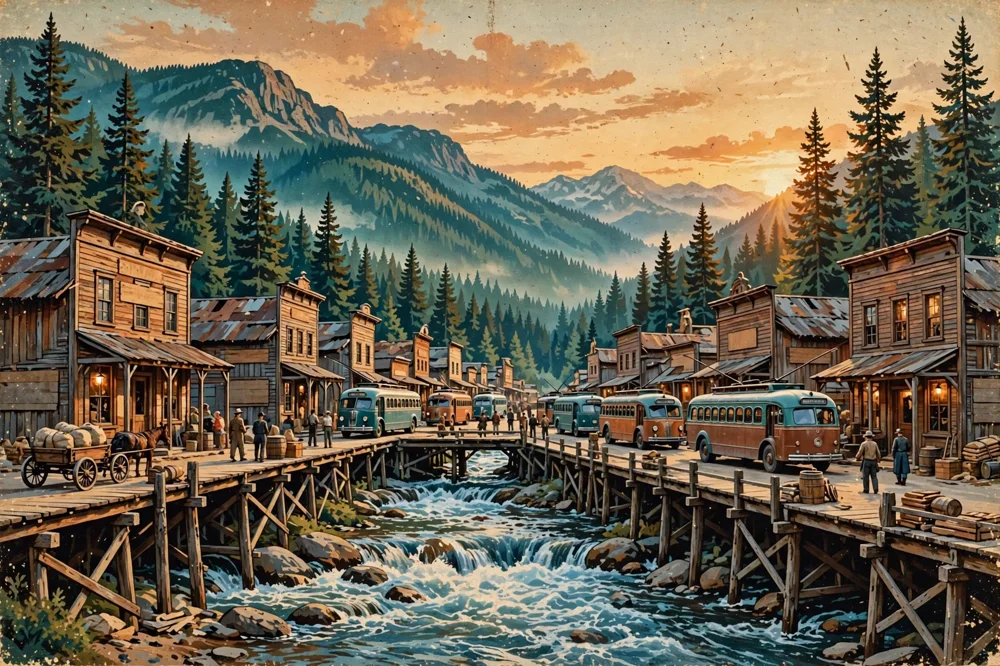
Sandon, in the Slocan Valley, was once one of the richest silver towns on the continent — thousands of residents, electric light before most cities had it, and a main street built over a creek because flat land was too precious to waste.
Today Sandon is a town of a handful of people and a remarkable collection of heritage buildings, kept standing by sheer stubbornness. Its strangest sight might be the fleet of vintage Brill trolley buses parked by the road — rescued city buses from another era, waiting out their retirement in a ghost town. Nobody planned that. That’s exactly why it’s wonderful.
Barkerville: The Ghost Town That Got a Second Life
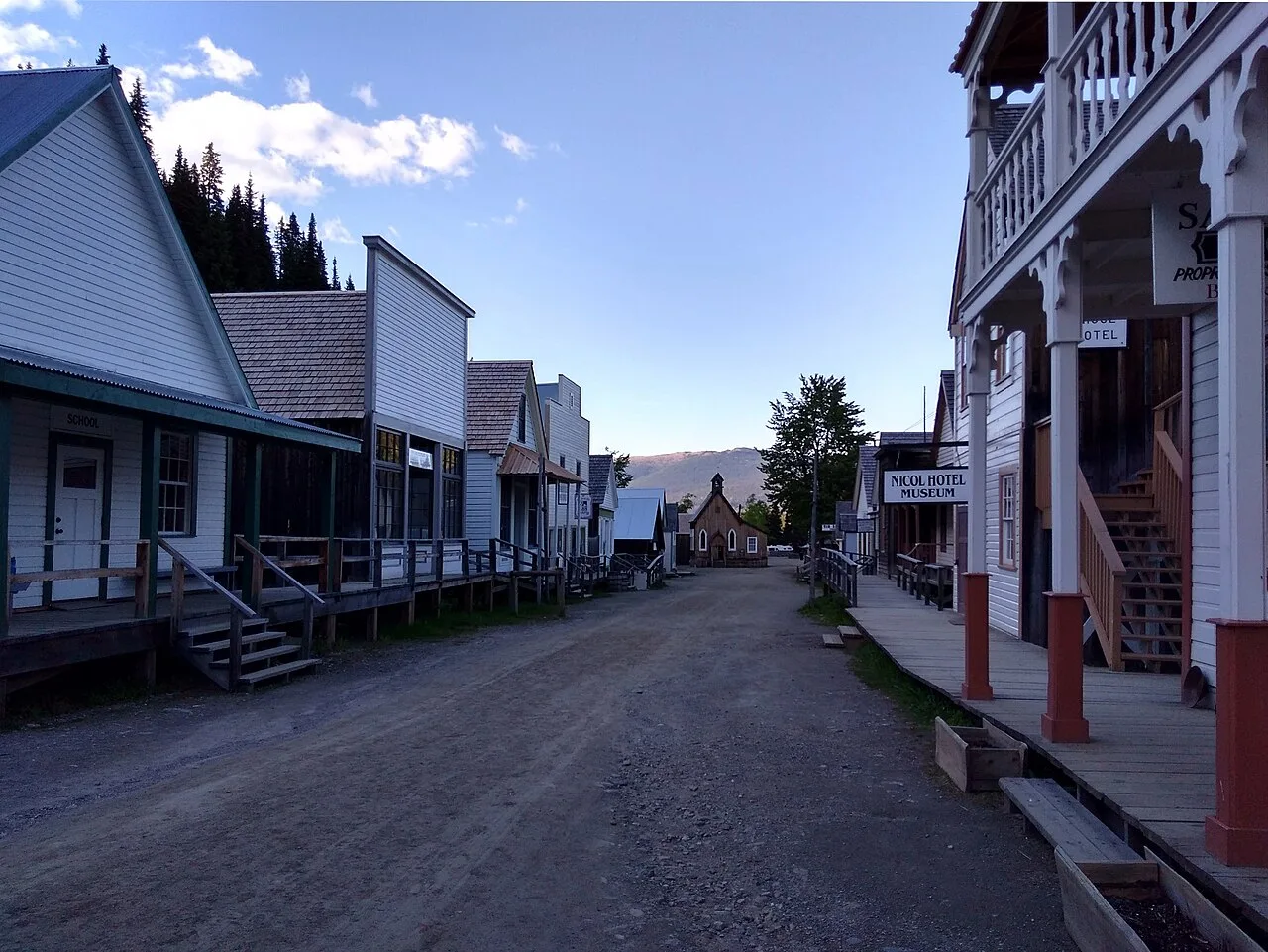
Barkerville isn’t a true ghost town — it’s a gold rush town preserved as a living heritage site, with costumed interpreters, a working main street of 19th-century shops, and more than a century of continuous stubborn existence behind it.
Go anyway. Barkerville is what happens when a province decides a ghost town is worth saving whole, and it anchors the whole idea of this atlas: these places aren’t ruins, they’re relatives. You don’t mock them. You visit, you listen, and you buy a coffee.
Phoenix: The One That Vanished
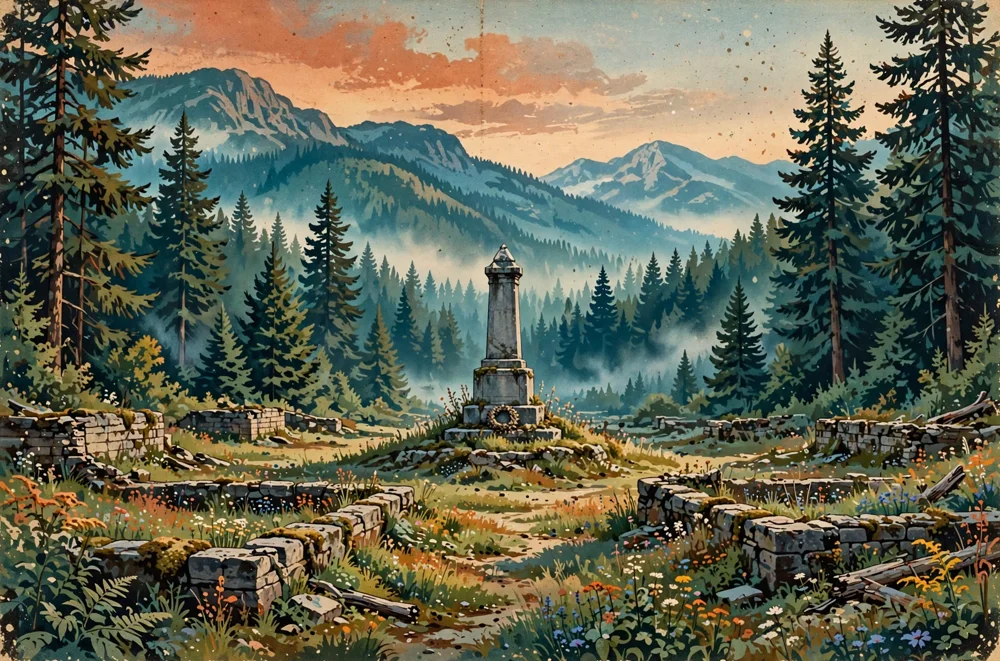
And then there’s Phoenix, high above Grand Forks — once a copper boom city with thousands of people, grand hotels, and its own newspaper. When the mine closed after the First World War, the town didn’t just empty. It was dismantled. Buildings were hauled away, and the city was quite deliberately un-built.
What’s left is foundations in the forest, a cenotaph, and an eerie, beautiful quiet. Phoenix is the ghost town that teaches you the rule of all the others: nothing out here is guaranteed to still be standing. Which is why we write them down.
The ore always runs out. The story doesn’t have to.
Why We Chase Them
Every ghost town in the interior is a town that bet everything on a hole in the ground — and lost, gracefully, over about a hundred years. The ones that remain are kept up by tiny historical societies, stubborn holdouts, and the occasional bus enthusiast. The least a road trip can do is show up, read the plaques, and take the long way home.
Common Questions
Which ghost towns does this route include?
The route focuses on Sandon in the Slocan Valley, Barkerville, and Phoenix high above Grand Forks. Sandon keeps heritage buildings and vintage Brill trolley buses, Barkerville is a living heritage site, and Phoenix is mostly foundations and a cenotaph.
Is Barkerville a true ghost town?
Not quite. Barkerville is a gold-rush town preserved as a living heritage site, with costumed interpreters and a working main street of 19th-century shops.
What is left of Phoenix?
Phoenix was dismantled after its mine closed following the First World War. What remains are foundations in the forest, a cenotaph, and a quiet townsite.
What should travellers know before visiting BC ghost towns?
Services can be scarce and cell service fades in the valleys, so fill the tank and download maps before leaving the highway. Many buildings are private or fragile heritage, so admire them from the road and leave everything as you found it. Heritage sites and museums are often seasonal.
The Real Thing
More Strange Stops
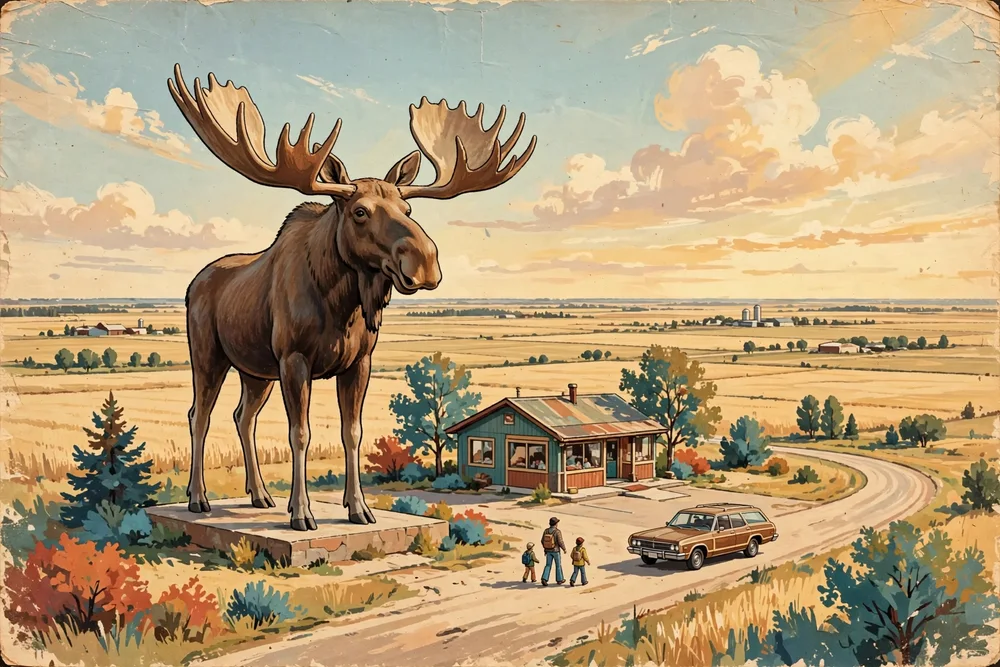
Mac the Moose
Moose Jaw's Mac the Moose has watched the Trans-Canada Highway since 1984 — and when Norway built a taller moose, Saskatchewan answered with bigger antlers.
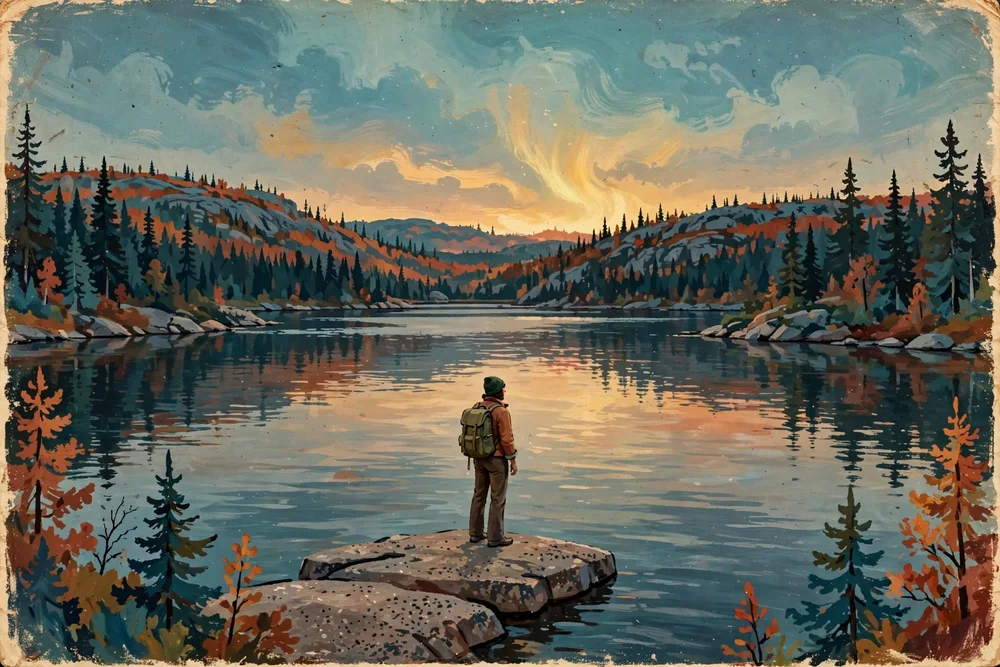
Falcon Lake: Canada's Strangest UFO Story
In 1967, a Winnipeg prospector walked out of the Whiteshell woods with grid-pattern burns and a story he never changed. You can still hike to the rock.